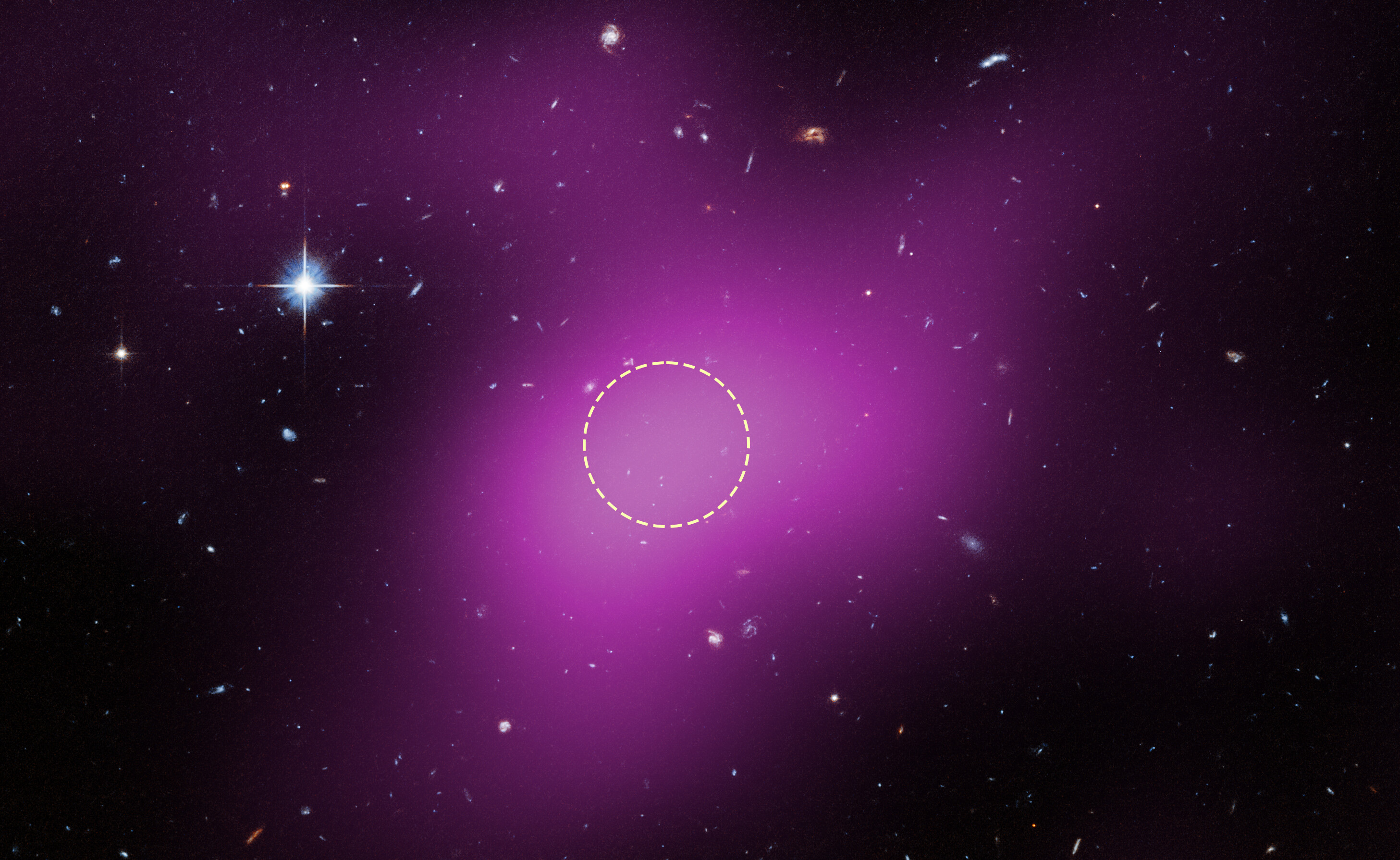
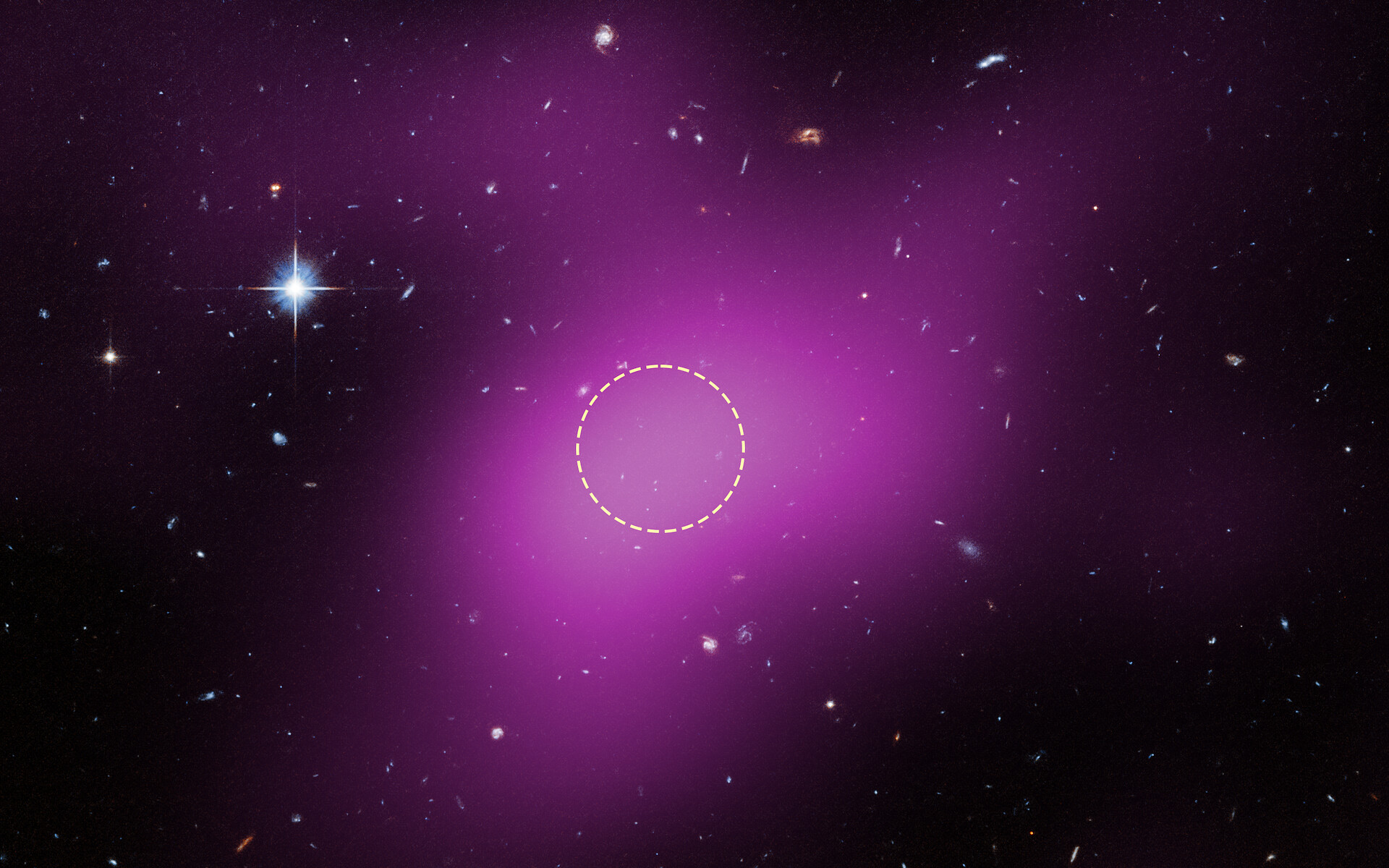
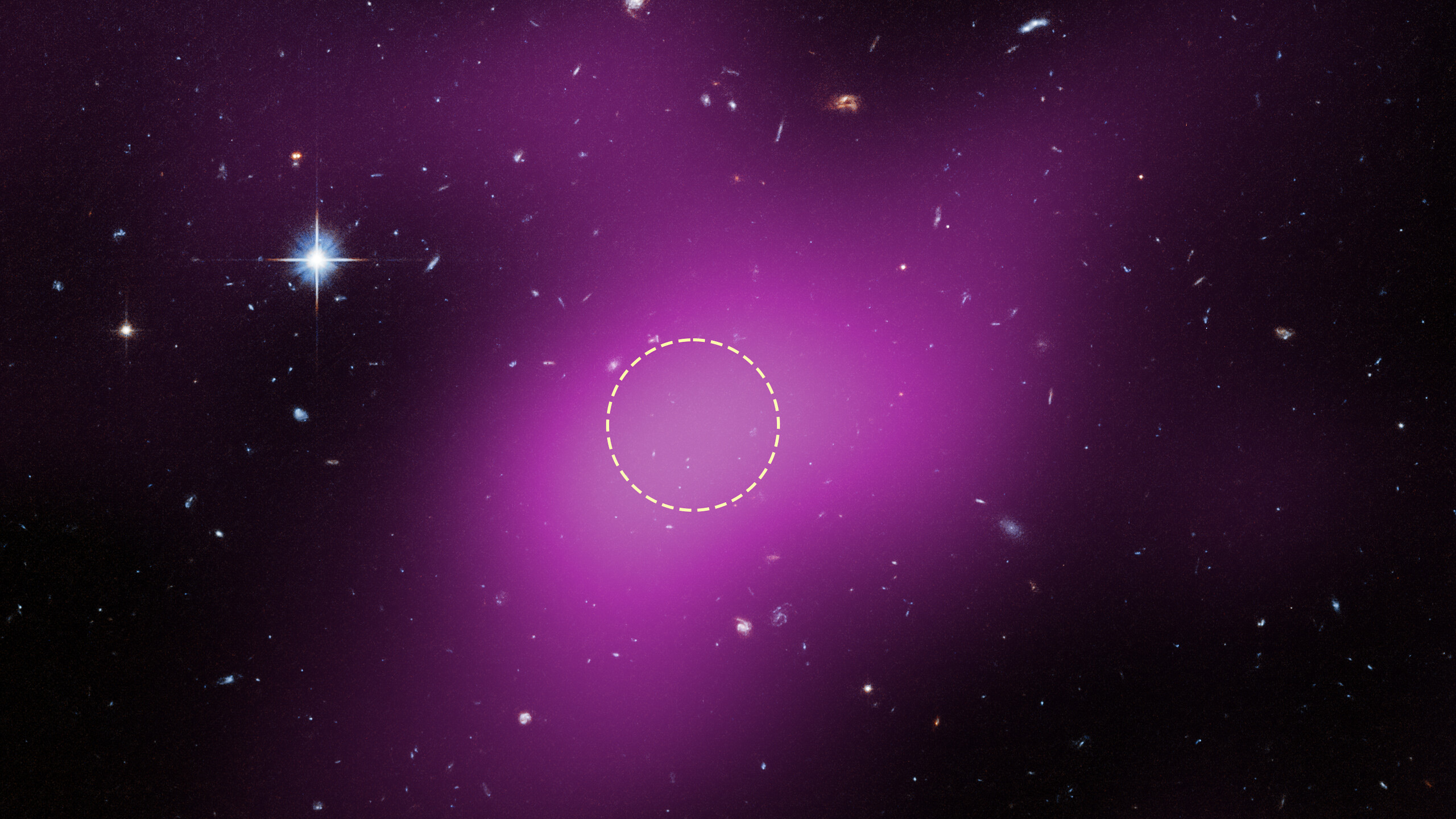
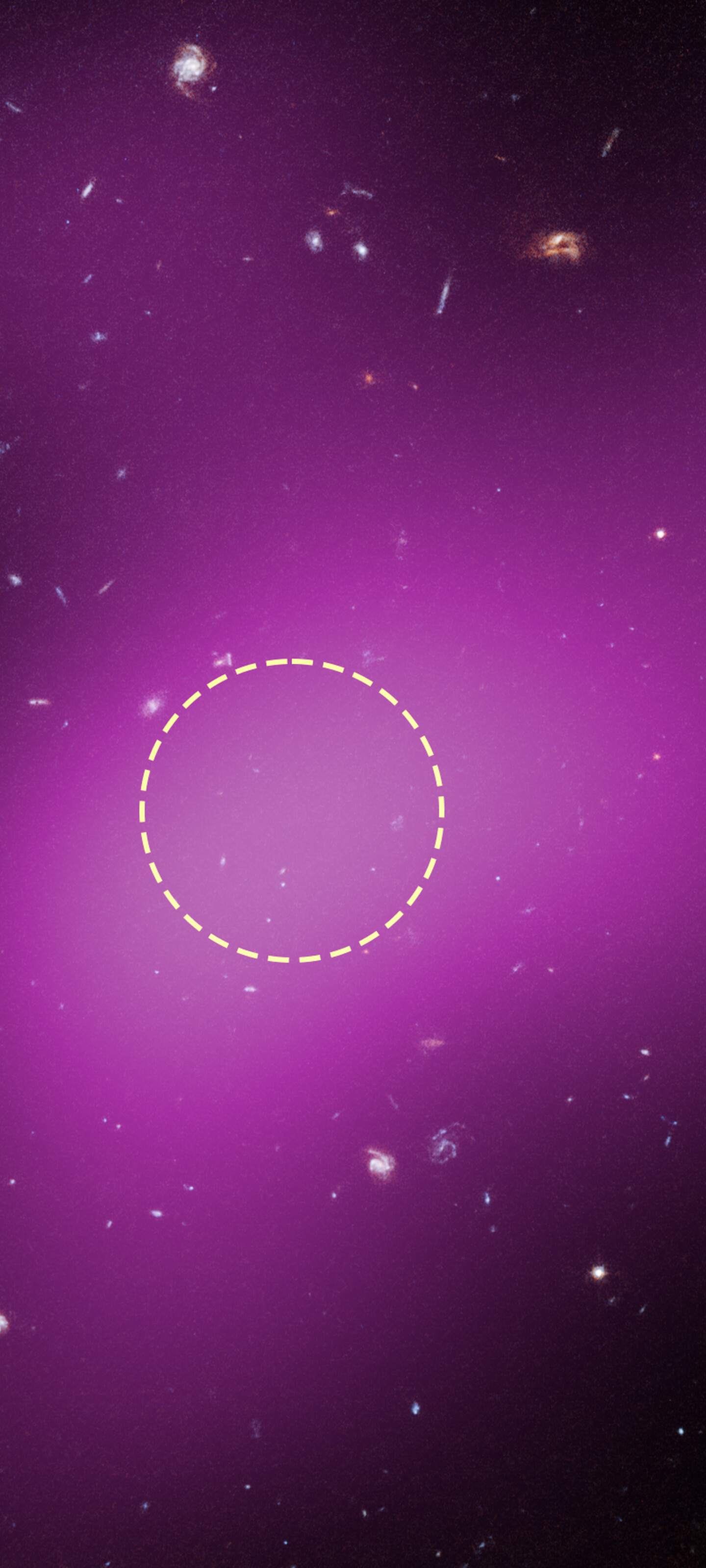
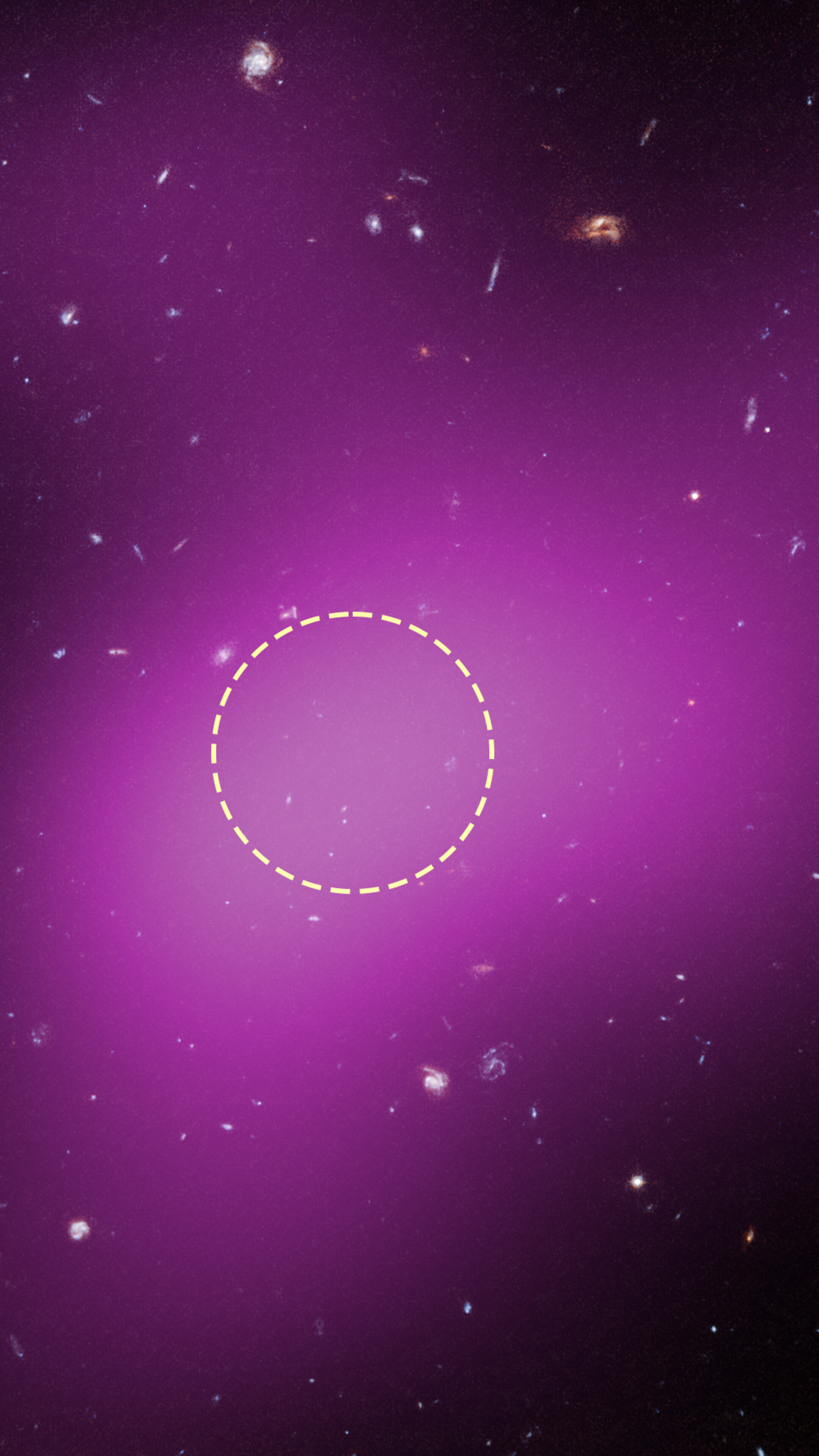
This image shows the location of Cloud-9, which is 2,000 light-years from Earth.

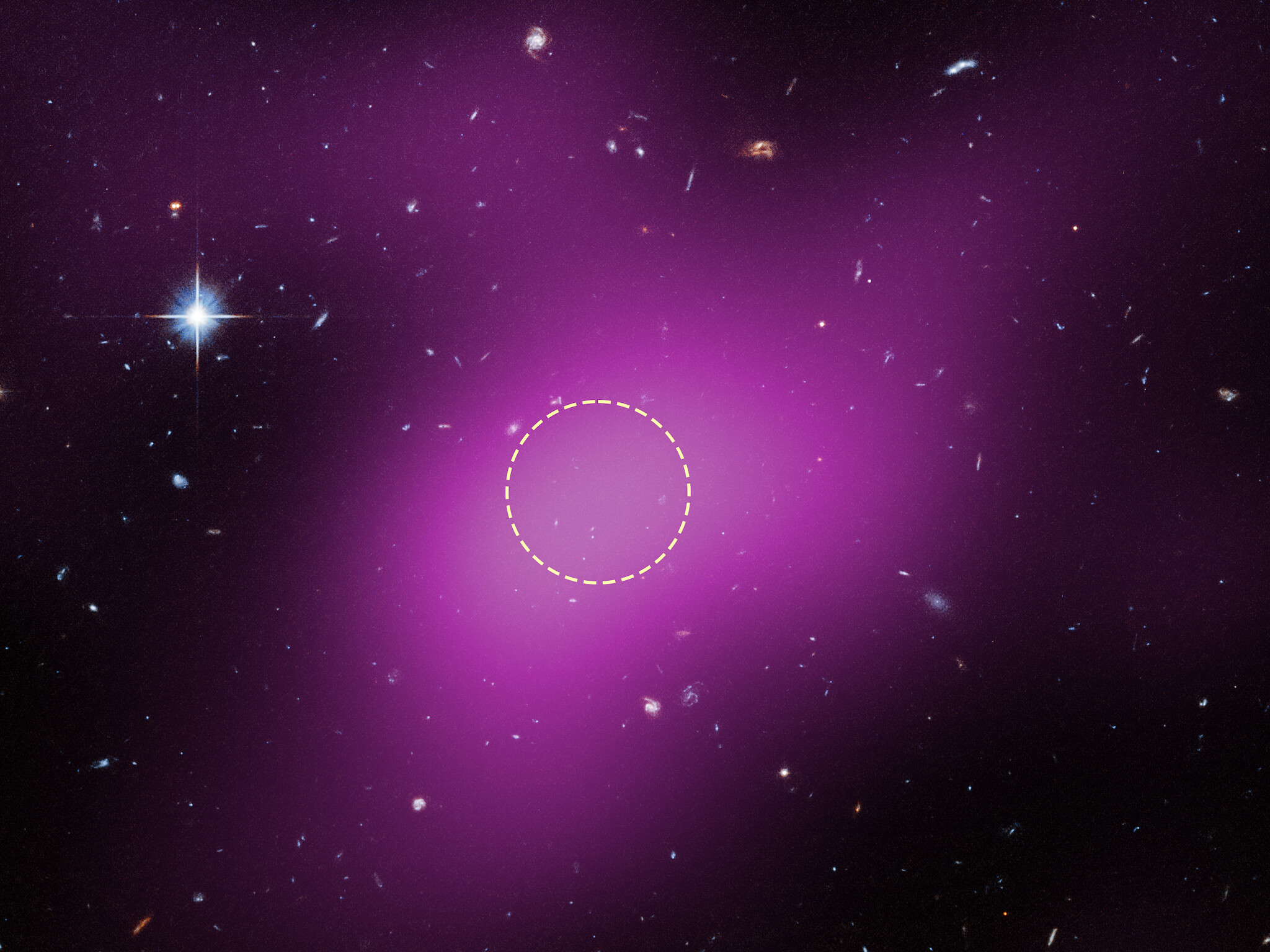
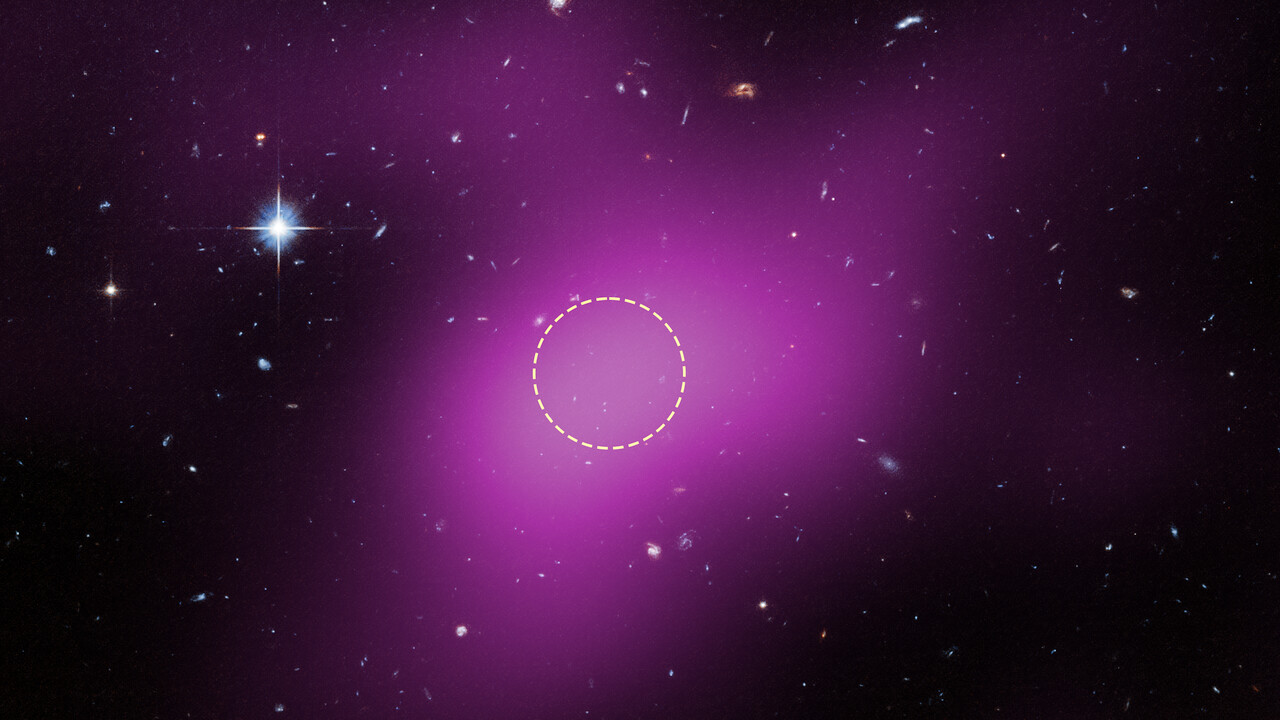
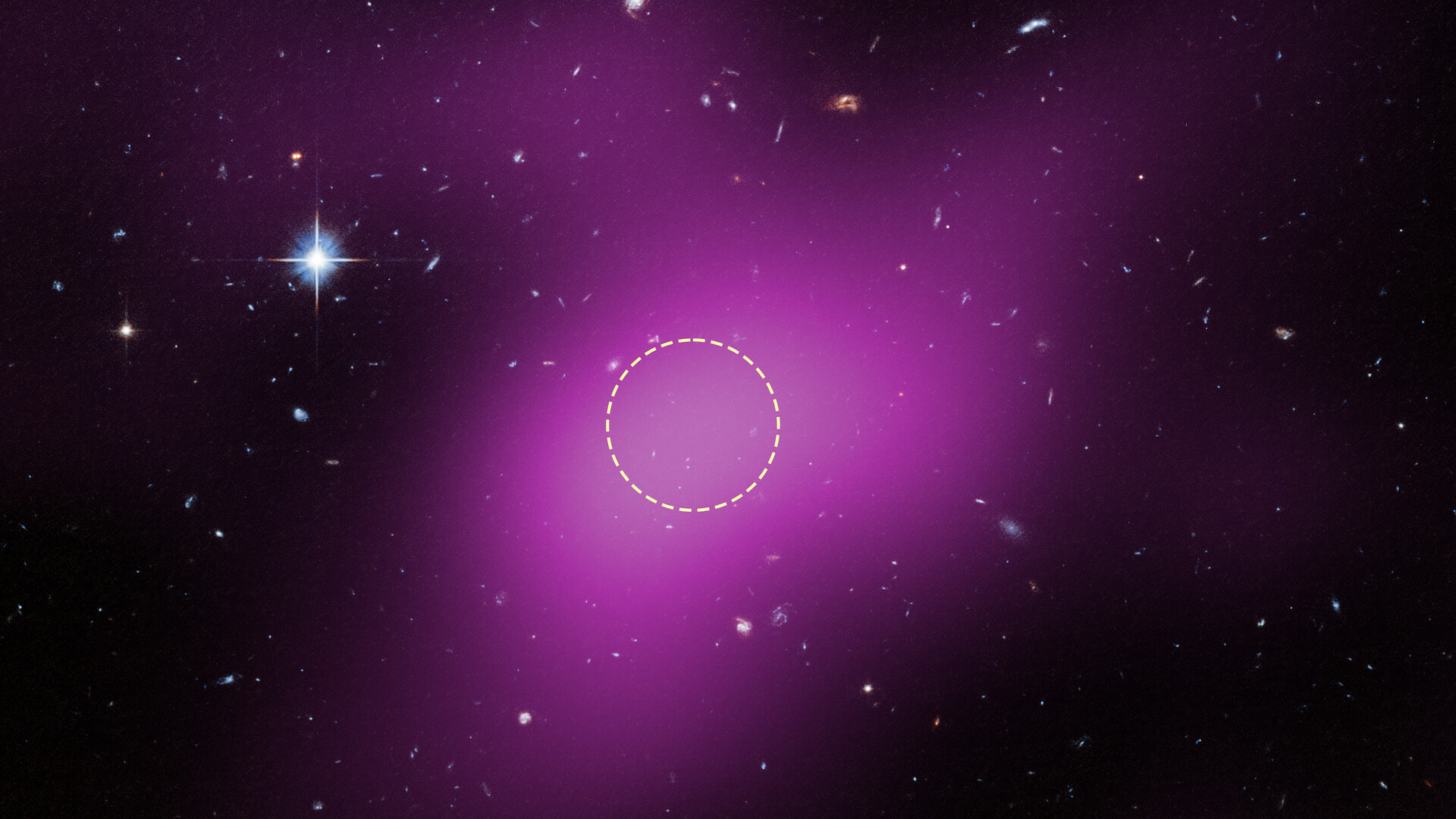
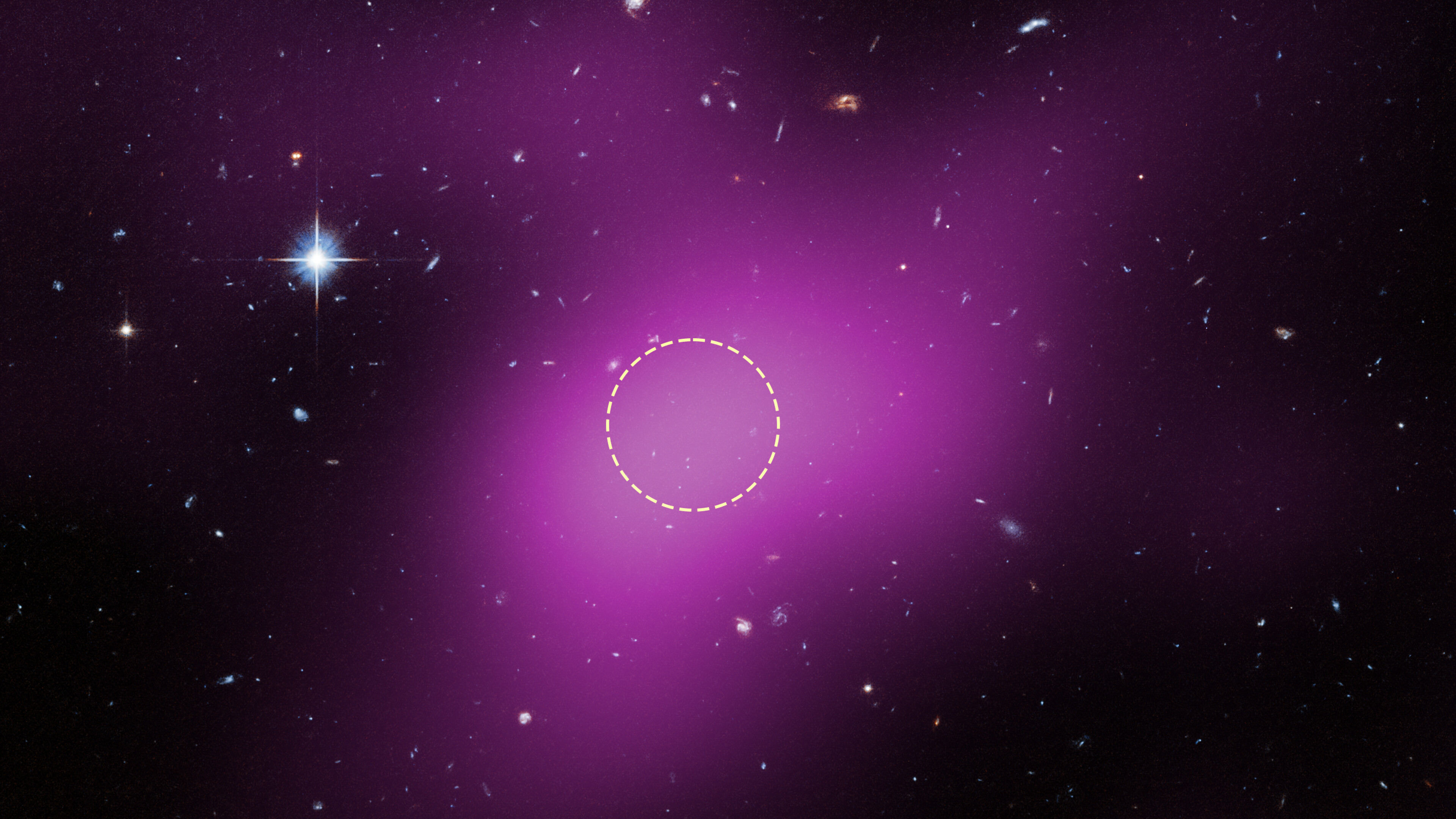
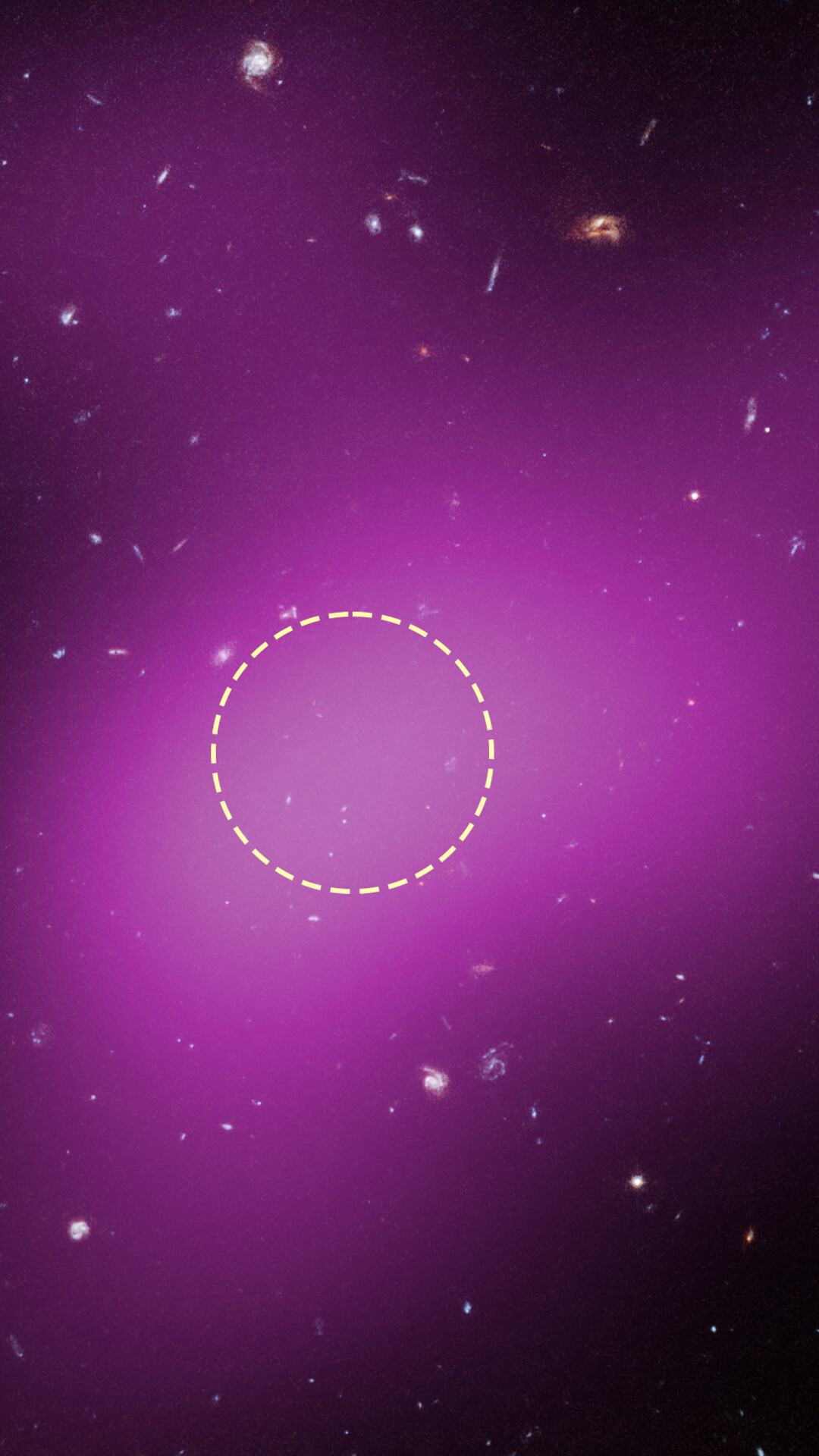
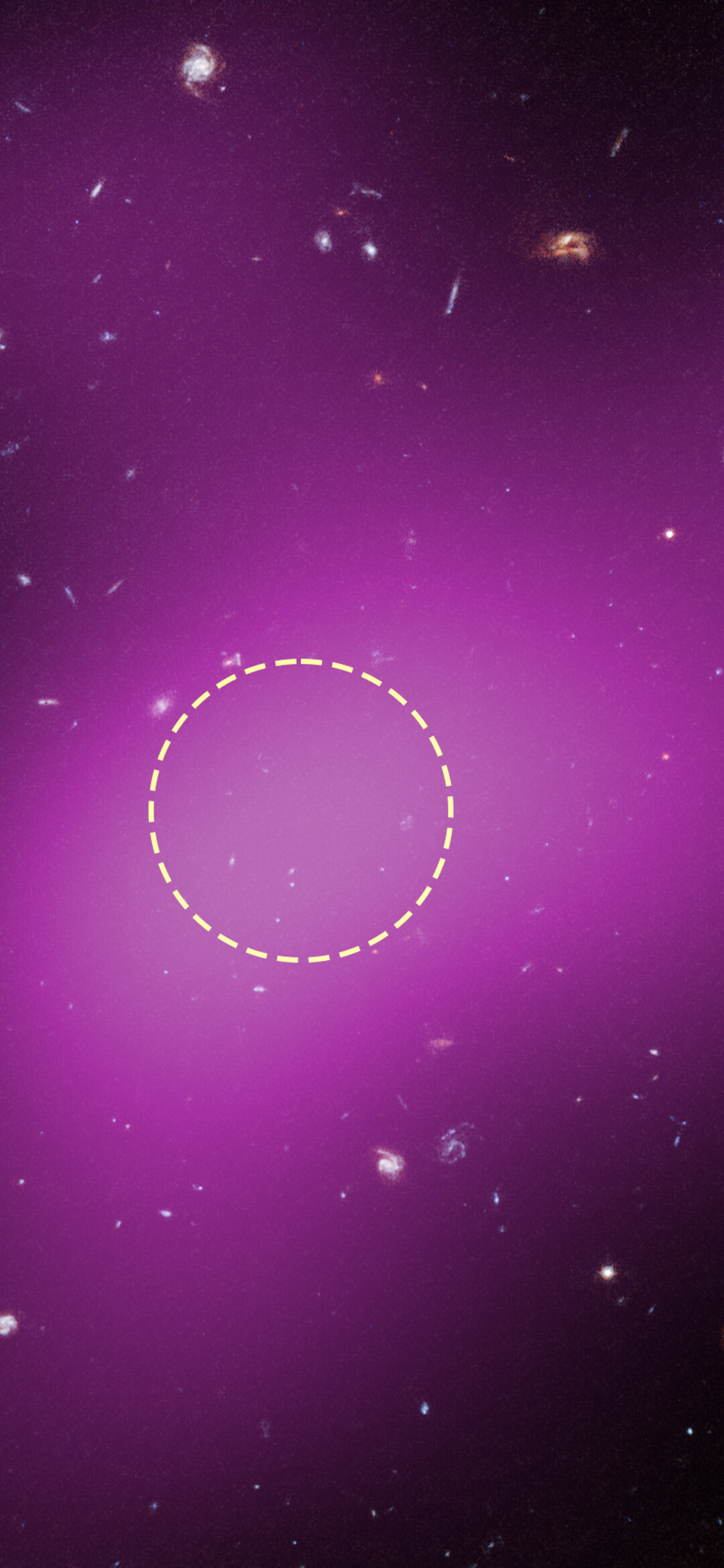
This image shows the location of Cloud-9, which is 14 million light-years from Earth. The diffuse magenta is radio data from the ground-based Very Large Array (VLA) showing the presence of the cloud. The dashed circle marks the peak of radio emission,which is where researchers focused their search for stars. Follow-up observations by the NASA/ESA Hubble Space Telescope’s Advanced Camera for Surveys found no stars within the cloud. The few objects that appear within its boundaries are background galaxies. Before the Hubble observations, scientists could argue that Cloud-9 is a faint dwarf galaxy whose stars could not be seen with ground-based telescopes due to the lack of sensitivity. Hubble’s Advanced Camera for Surveys shows that, in reality, the failed galaxy contains no stars.
[Image description: A region of space mostly filled with background galaxies, with one prominent star at upper left. A large blob of purple haze occupies much of the field. Within the purple region, an unremarkable area is outlined with a dashed white circle.]
Credit:NASA, ESA. G. Anand (STScI), and A. Benitez-Llambay (Univ. of Milan-Bicocca); Image processing: J. DePasquale (STScI)