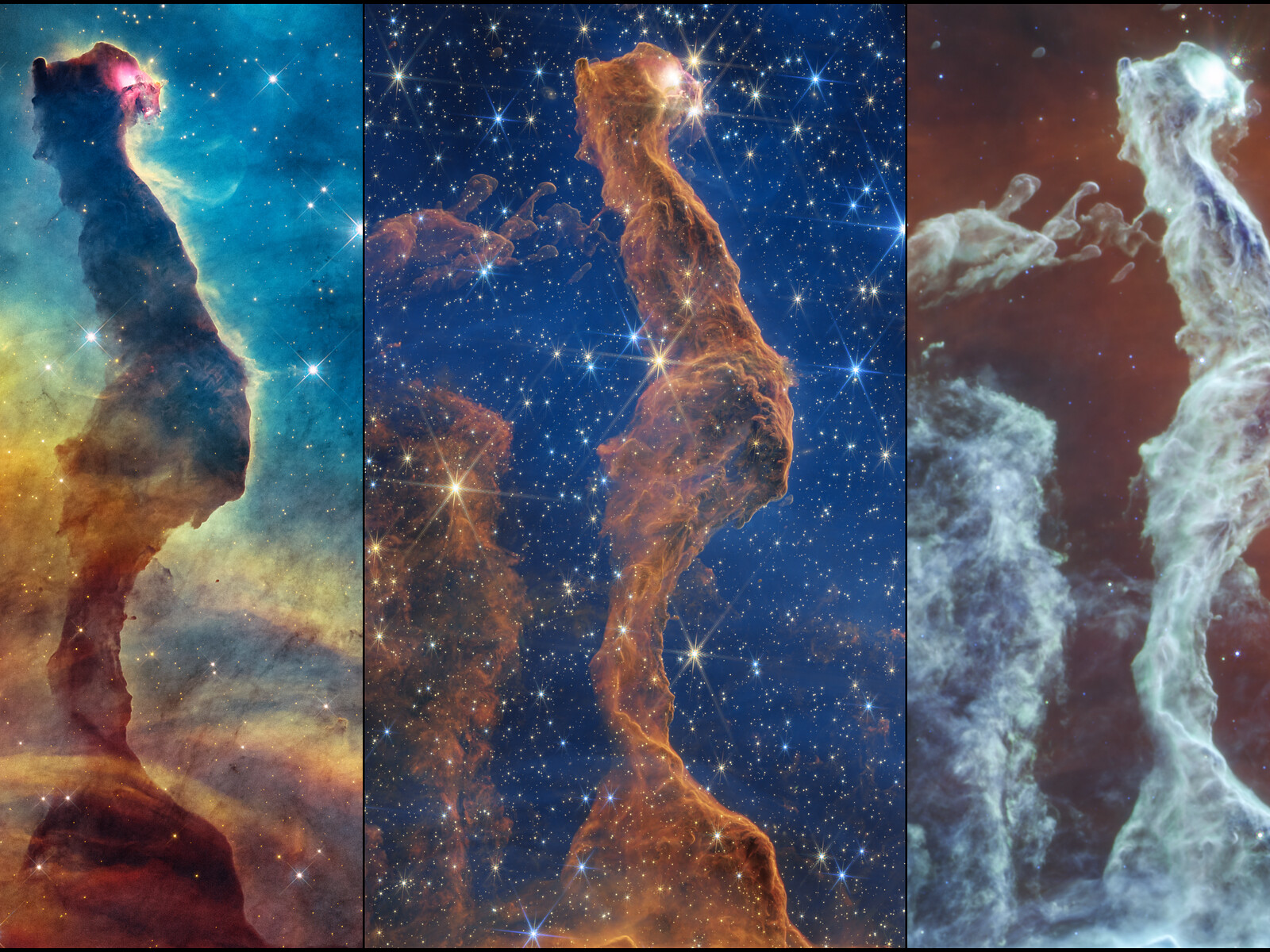
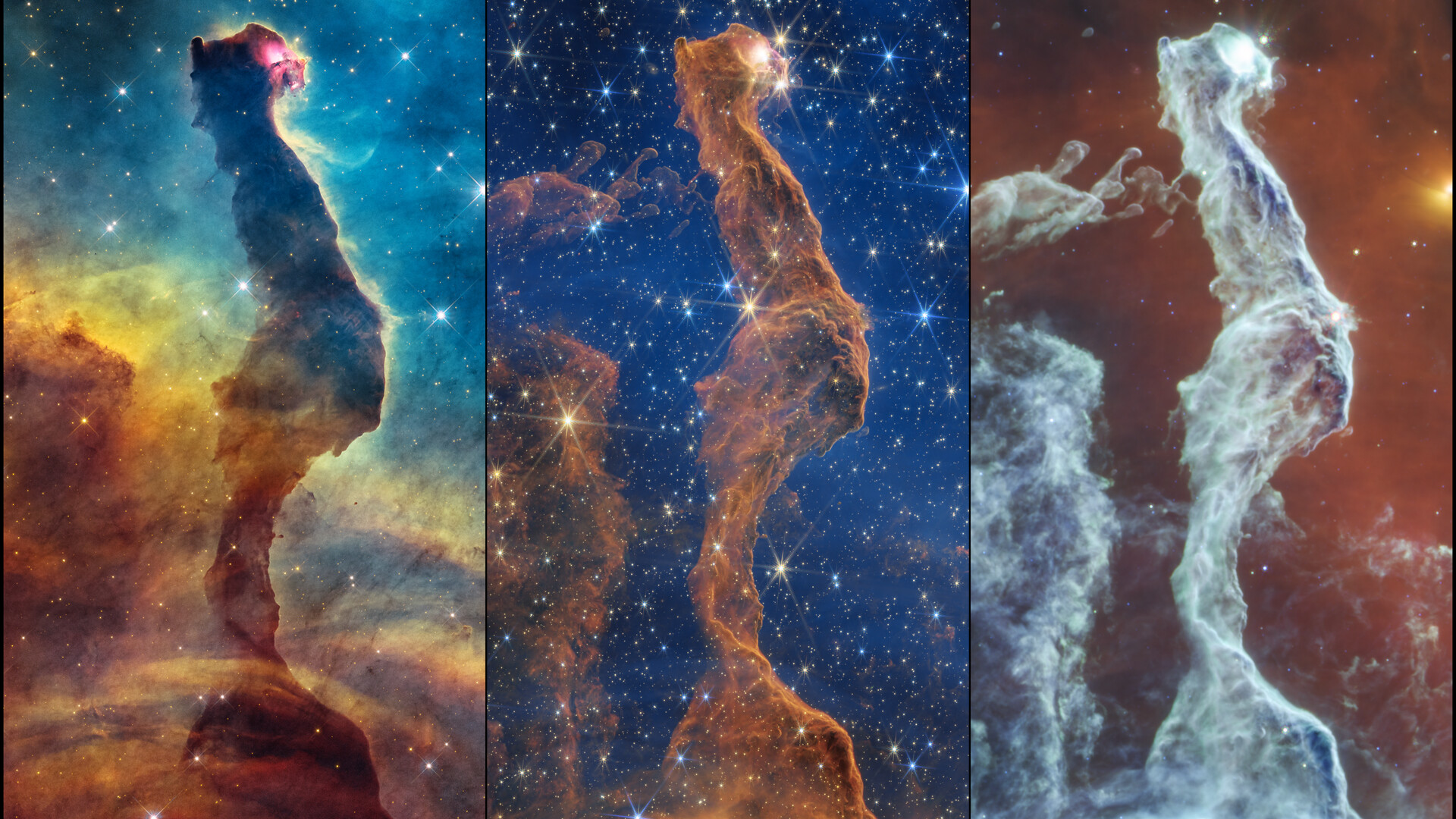
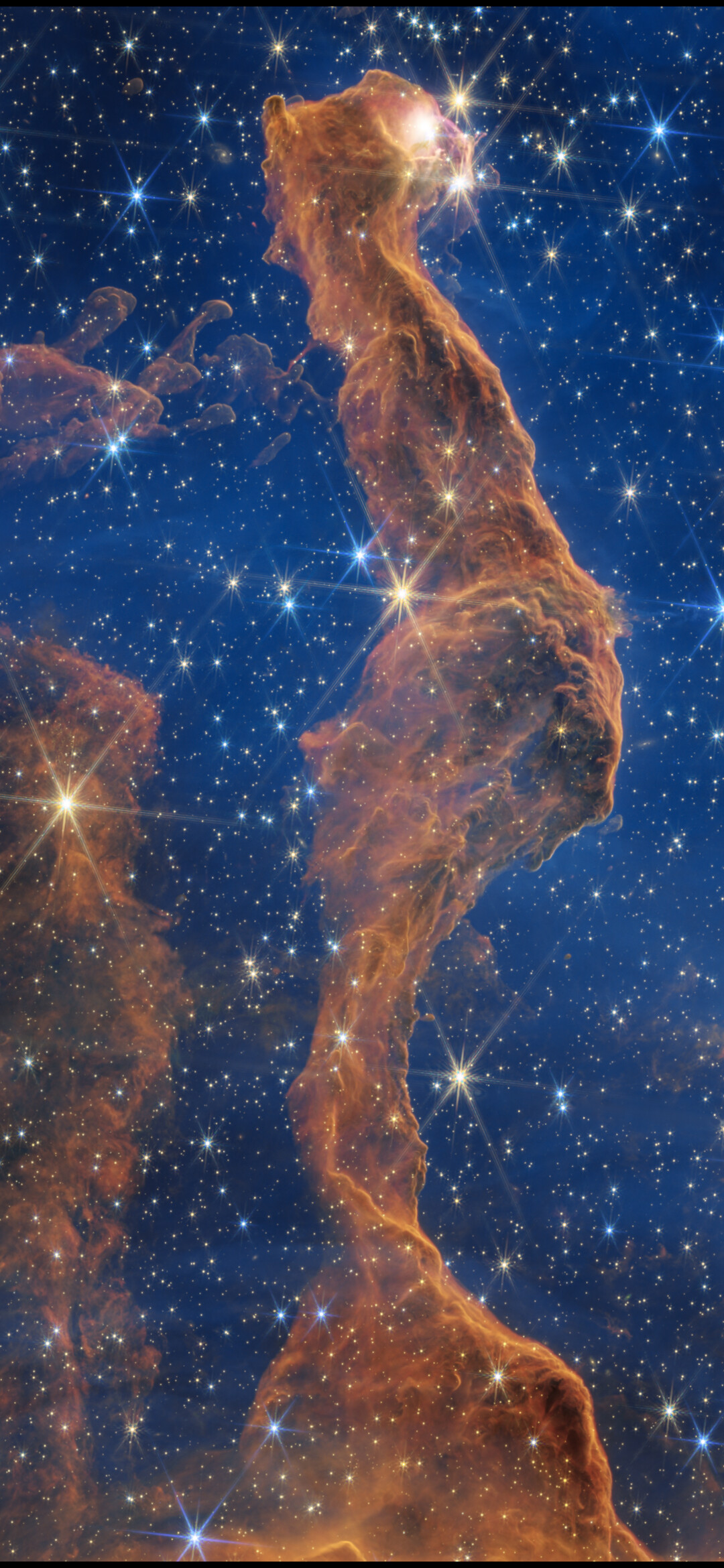
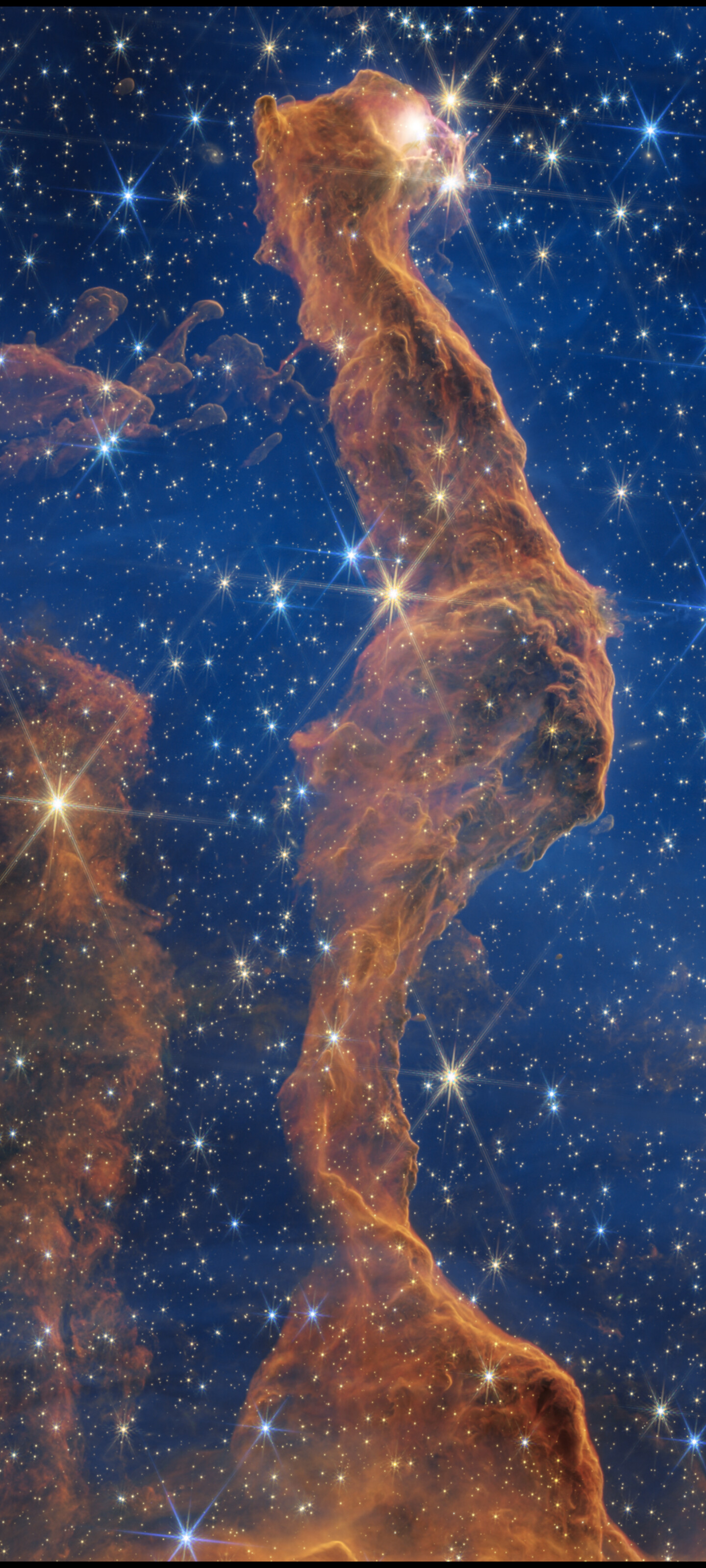
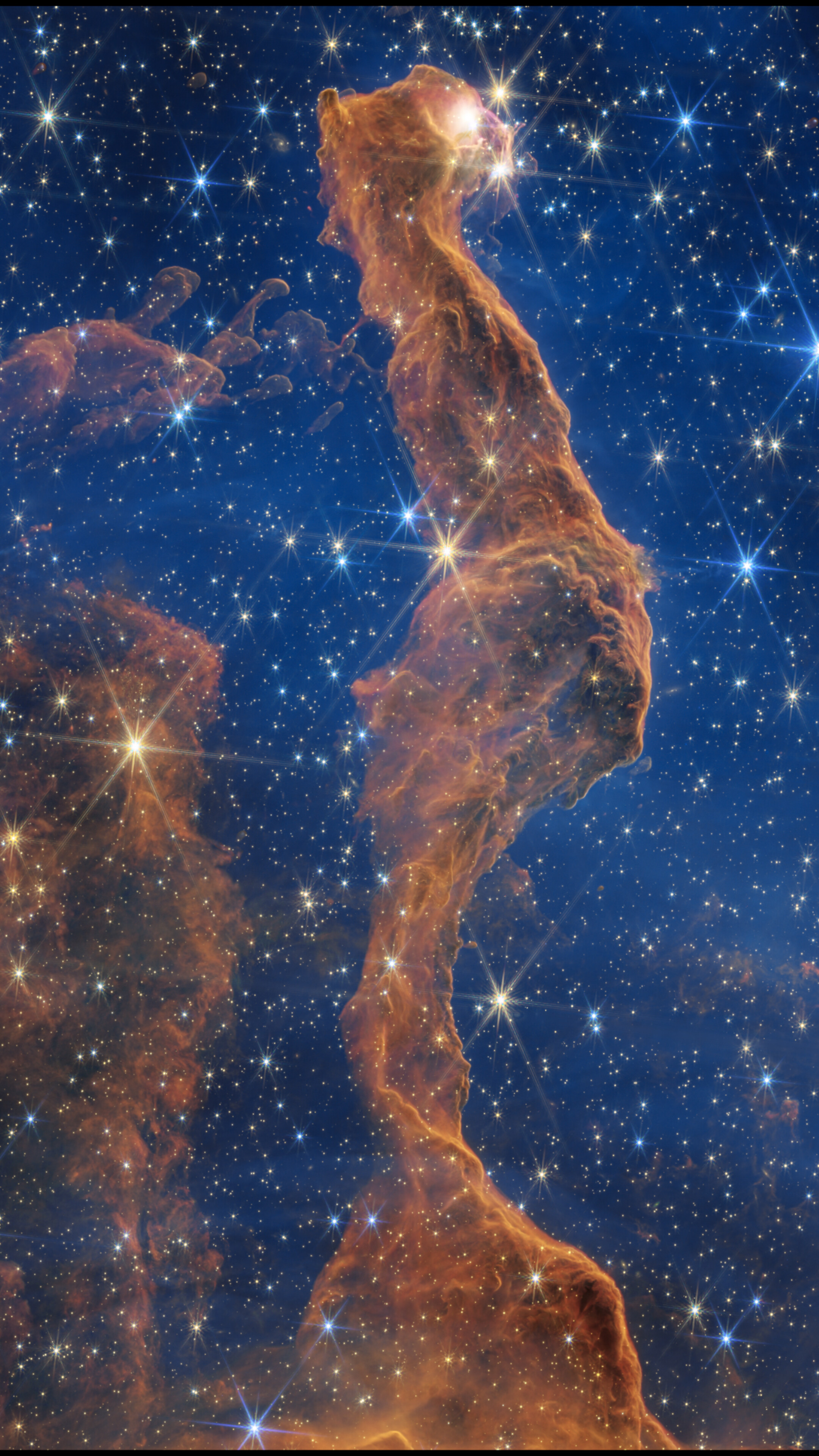
Cat’s Head Nebula (Hubble WFC3, Webb NIRCam, and Webb MIRI images)
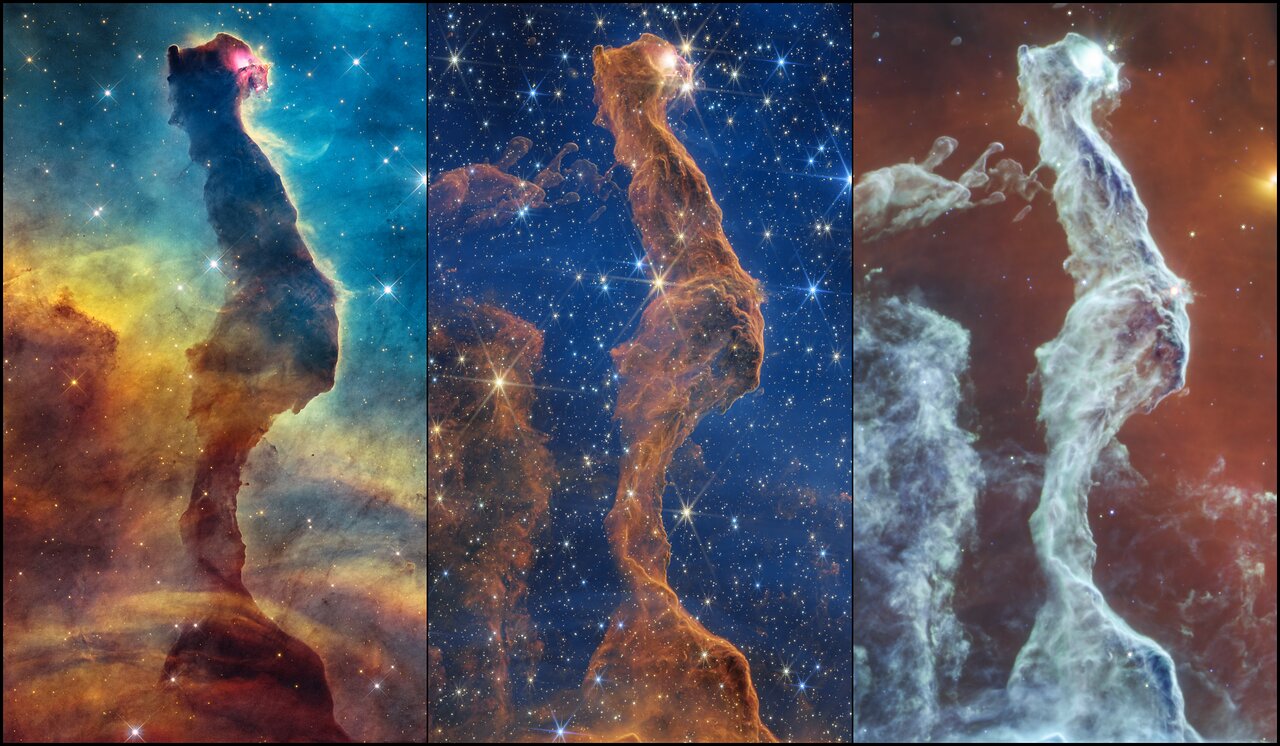
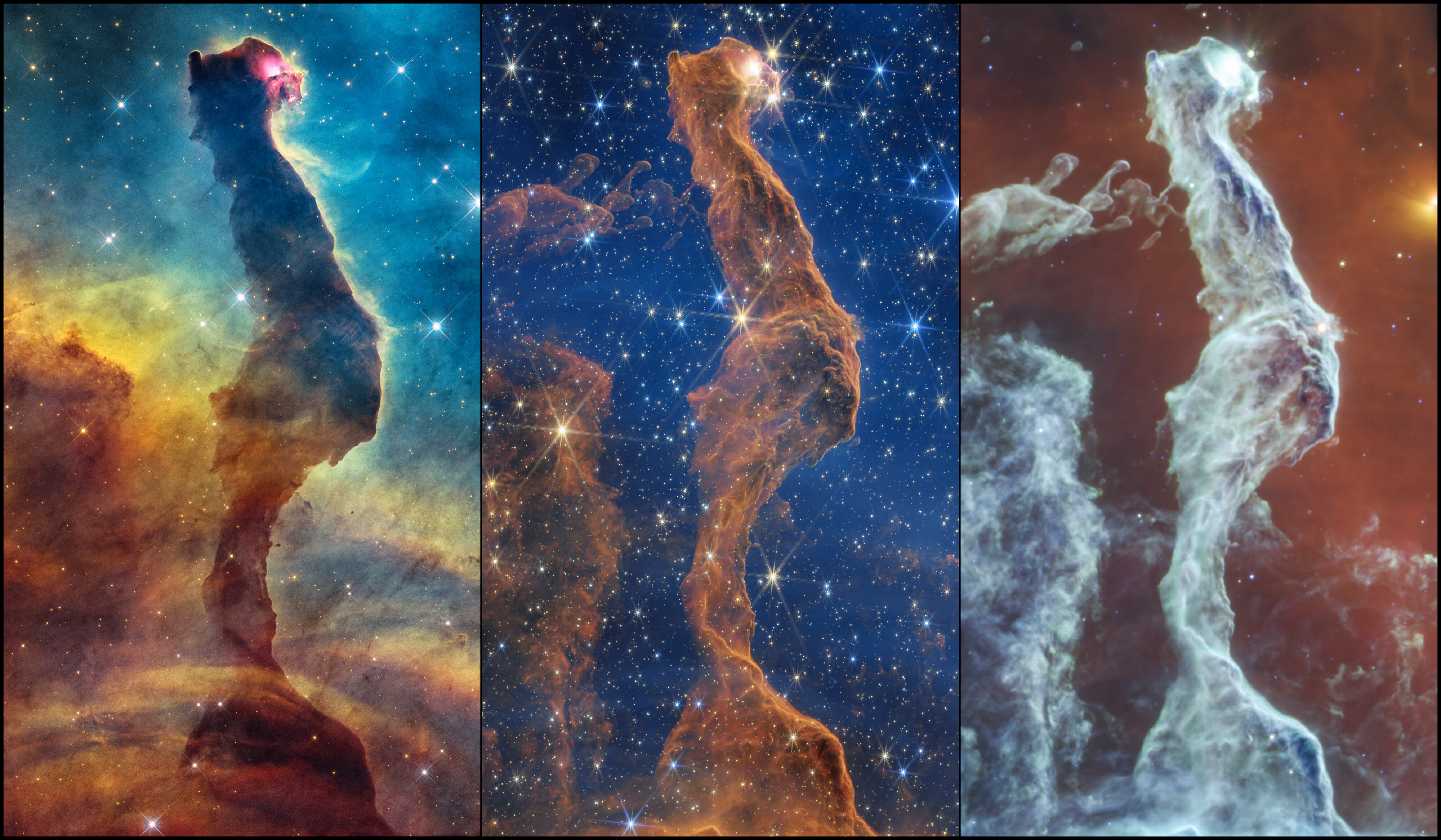
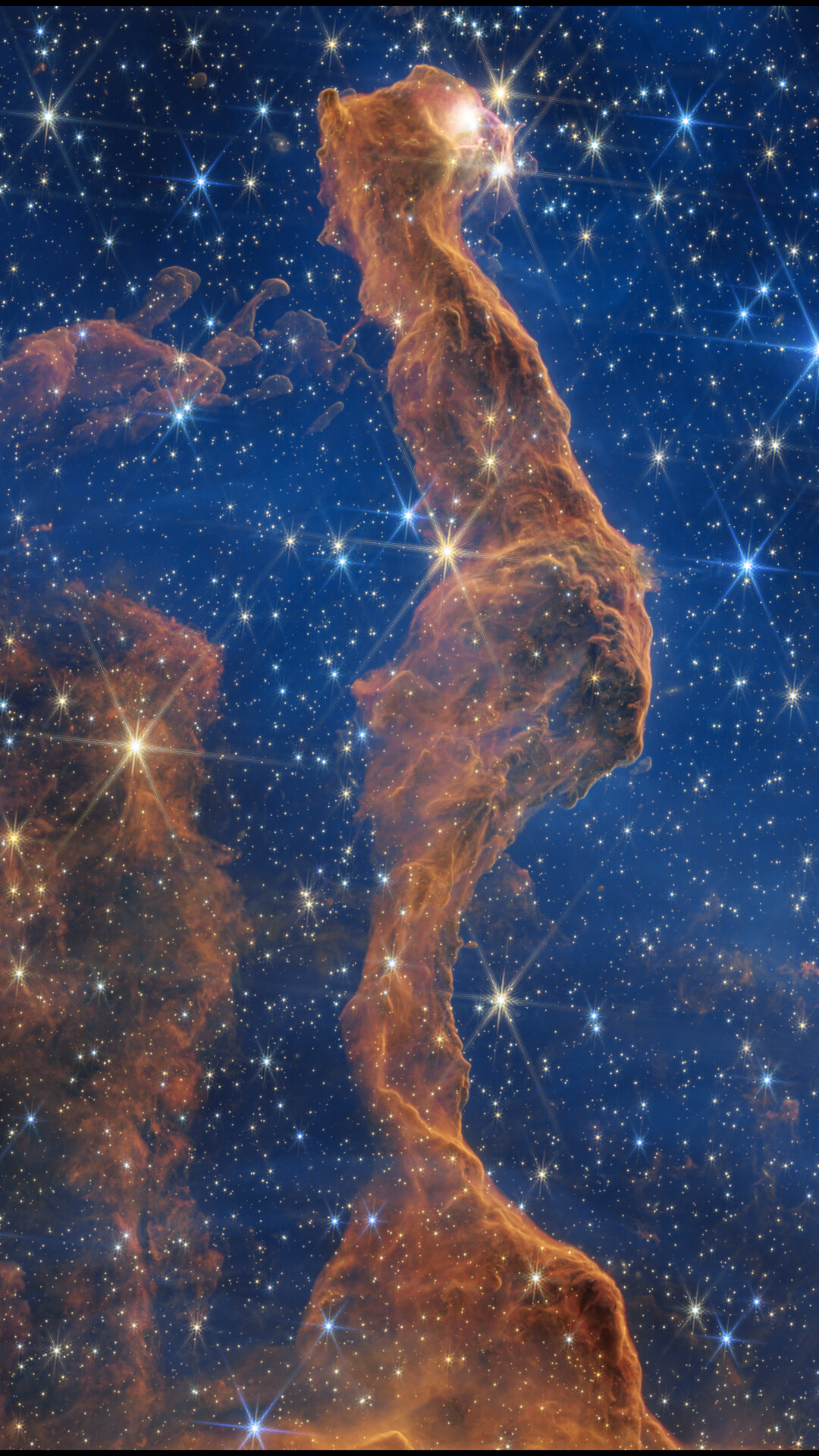
The NASA/ESA Hubble and the NASA/ESA/CSA James Webb Space Telescopes recently stared at an eerie star-forming scene within the Carina Nebula, a massive gas and dust cloud located approximately 7,500 light-years away from Earth. The two telescopes offer complementary views of the shadowy form, nicknamed the Cat’s Head Nebula, which reflects the “magical” process of star formation. Hubble’s visible-light view shows the cat as a dark, elongated dust pillar and hints of young forming stars, while Webb’s infrared-light imagery unveils many stars and other hidden details.
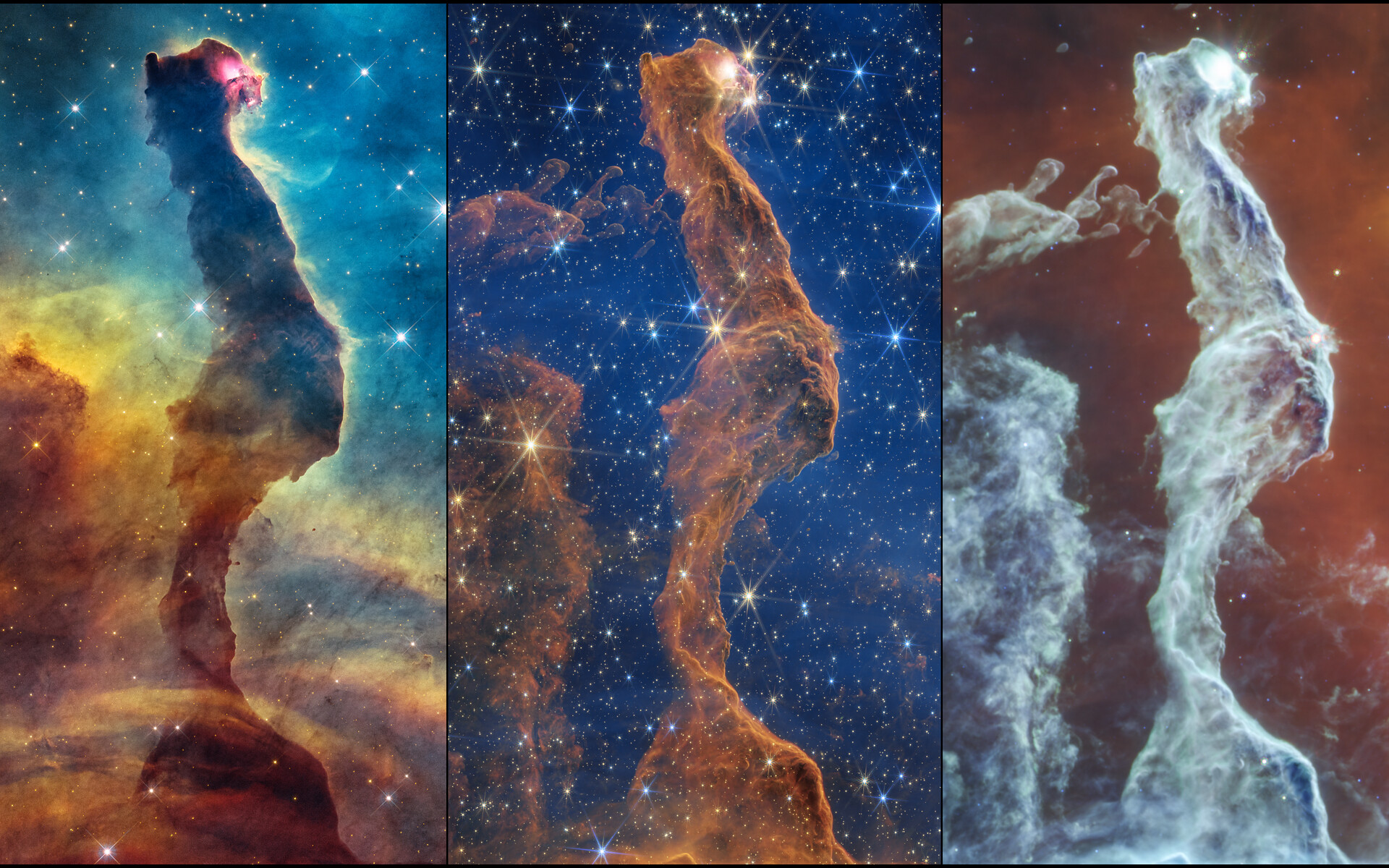
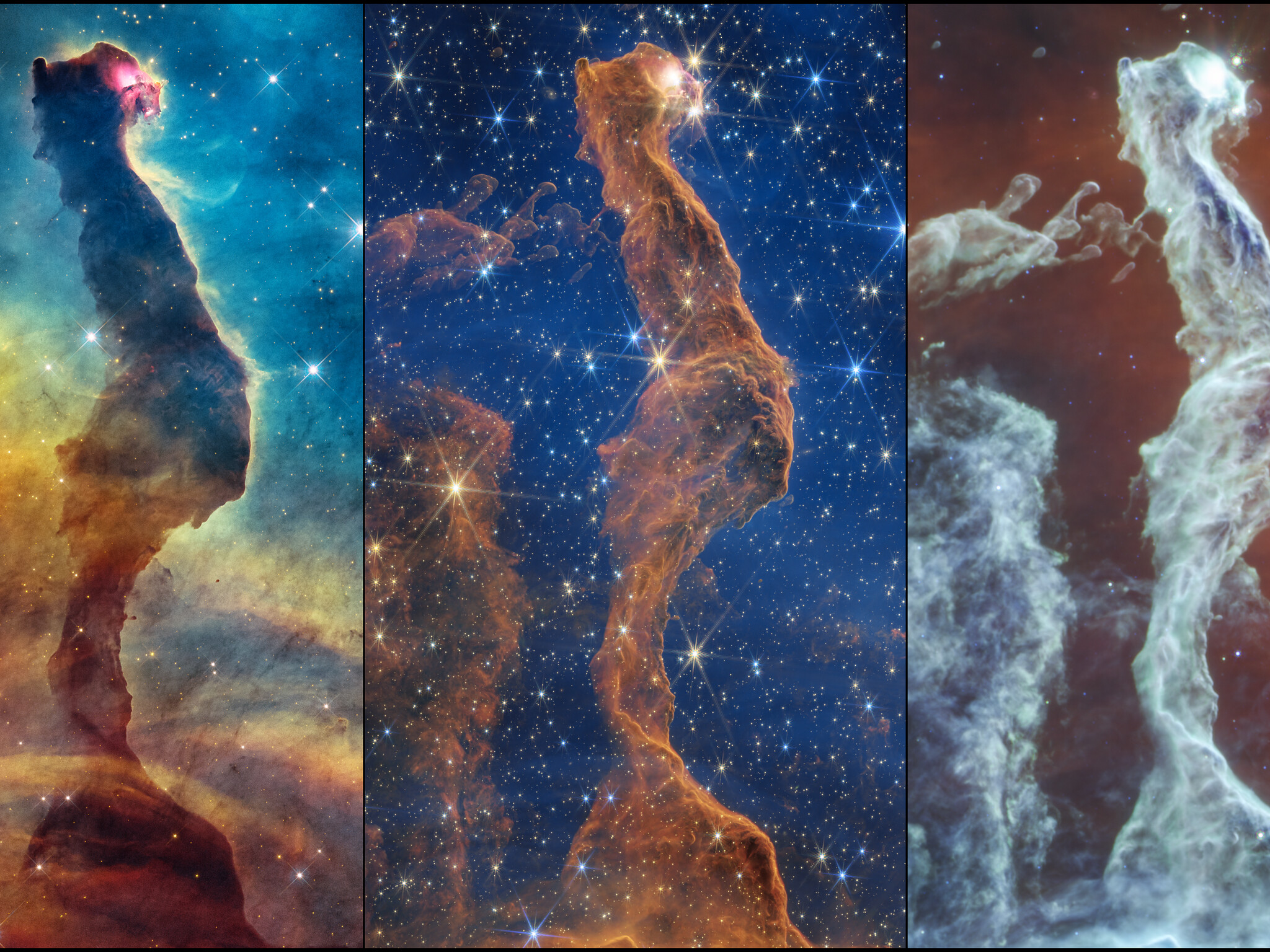
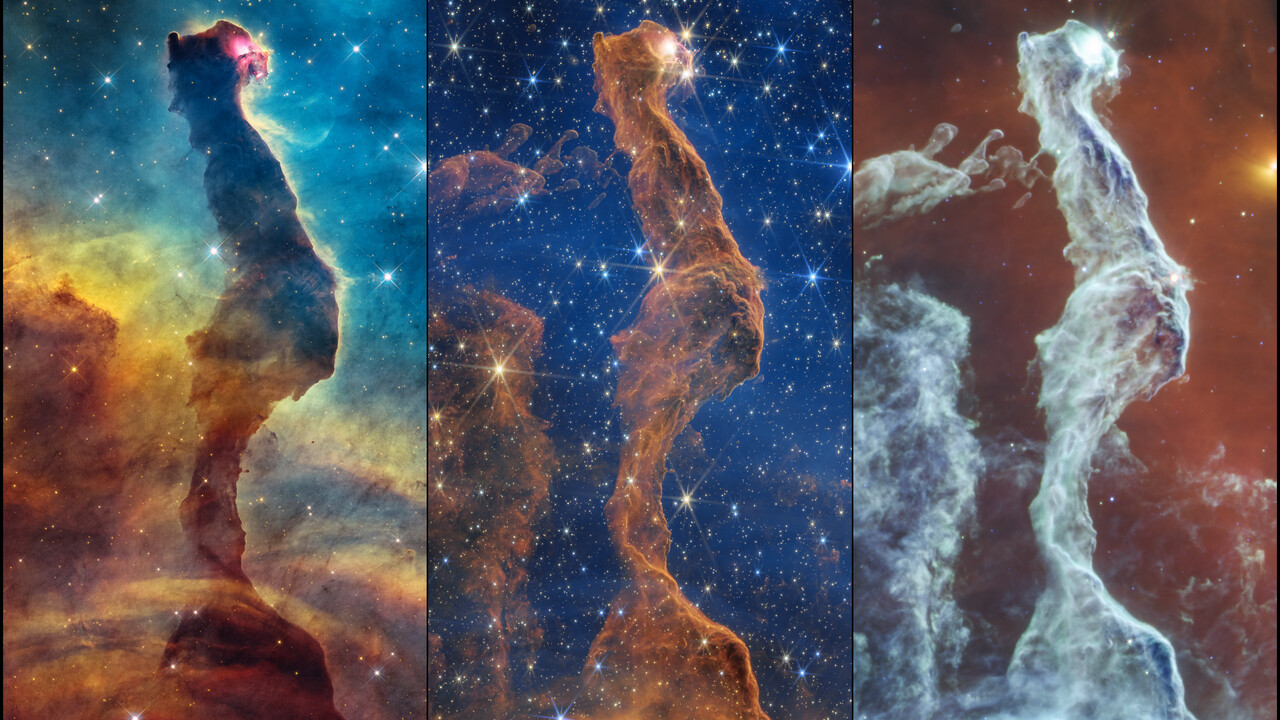
This collage shows three views of the Cat’s Head Nebula. Left: in visible light from Hubble’s WFC3 instrument; centre: in near-infrared from Webb’s NIRCam instrument; right: in mid-infrared from Webb’s MIRI instrument.
[Image description: A collage of three images of the Cat’s Head Nebula. On the right is a Hubble visible-light image. A dark brown, opaque filament of dust is in the center, stretching from the bottom to almost the very top. It has a narrow, irregular shape that resembles a cat sitting with its back toward the viewer and a tail extending downward. In the centre is Webb’s NIRCam view where bright red spot marks the eye. The top half of the background is bright blue. Approximately halfway down, cutting diagonally across the frame, the background colour changes from blue to yellow, orange, and finally red near the bottom. On the right is Webb’s MIRI view. A bluish-gray filament of dust is in the center, stretching from the bottom to almost the very top. It has a narrow, irregular shape that resembles a cat sitting with its back toward the viewer and a tail extending downward.]
NASA & ESA